Monday saw a decline in stocks as investors took a break following the major averages’ four-week winning run.
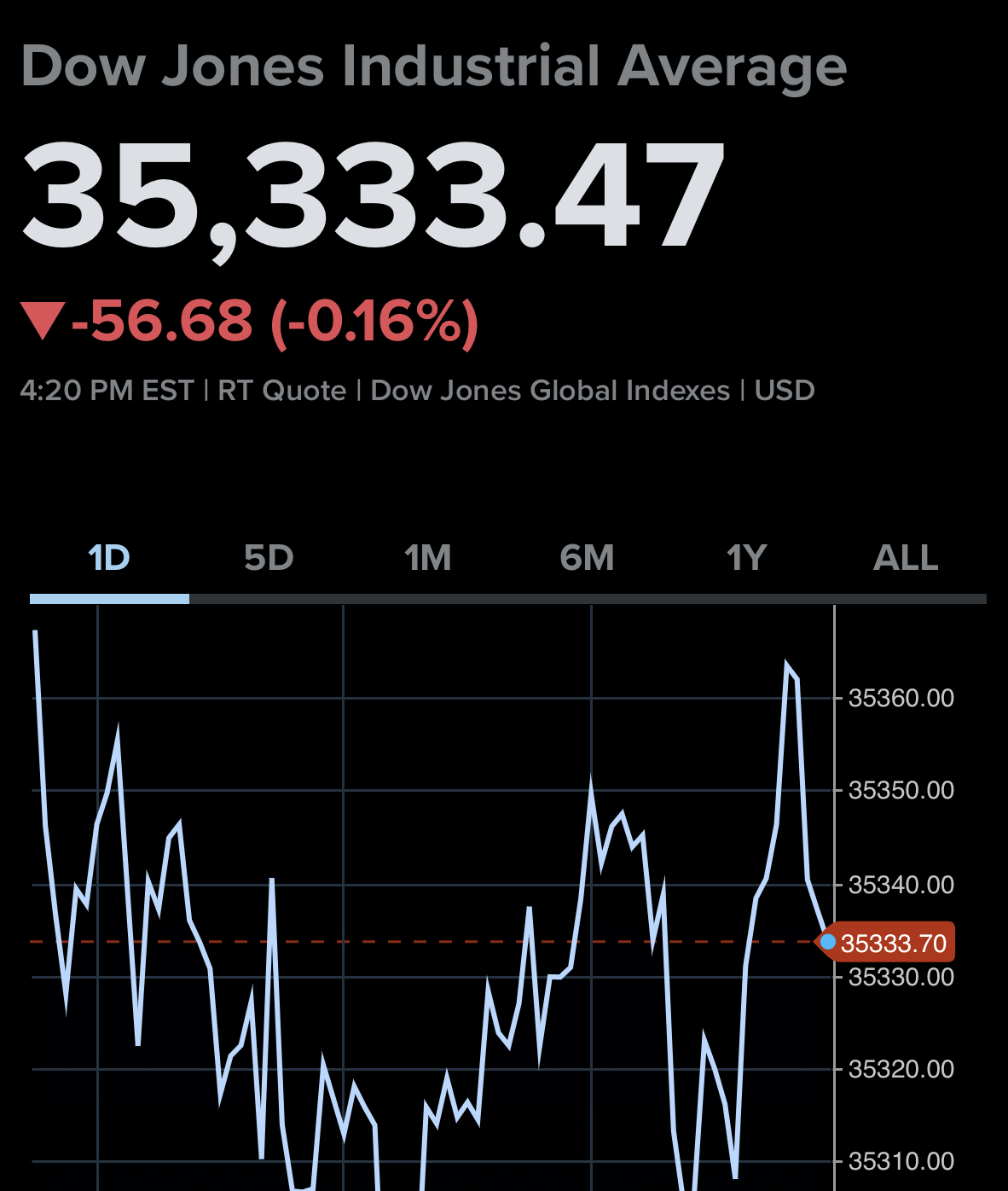
At 35,333.47, the Dow Jones Industrial Average dropped 56.68 points, or 0.16%. At 4,550, the S&P 500 fell by 0.20%.42. At 14,241.02, the Nasdaq Composite saw a 0.07% decline.
After a winning week for the fourth time in a row, Wall Street is celebrating as equities have risen since the 10-year Treasury yield fell back from the 5% level it briefly reached in late October. This month, the S&P 500 has gained 8.5%, the Dow has gained 6.9%, and the Nasdaq has increased by 10.8%.
Black Friday e-commerce spending increased 7.5% over the previous year, but several American retailers have warned that consumer spending is slowing down. Despite this, the rally went forward.
Cyber Monday saw gains in a few e-commerce companies, including 0.7% and 4.9% gains for Amazon and Shopify, respectively. As customers hurried to use BNPL options for their Cyber Monday purchases, the “buy now, pay later” company Affirm surged by almost 12%.
Overall weak expenditure figures may ultimately be a sign that the economy is now beginning to feel the effects of the Federal Reserve’s rate increases.
Quincy Krosby, chief global strategist at LPL Financial, stated that a slowdown in consumer spending would likely serve as a stimulus for the market since it would provide the foundation for the rebound. “The robust foundation and high conviction that the Fed is done with its rate-hiking campaign and will start cutting rates in 2024 have helped this market.”
According to Krosby, the market has been in short-term overbought conditions for a number of sessions. He also stated that this week’s movements will be greatly influenced by the yield on the 10-year Treasury note, especially in light of this week’s Fed remarks and significant readings for inflation and consumer confidence.
The bond market continues to be the primary driver of stocks, according to Phillip Colmar, managing partner and global macro strategist at MRB Partners. He noted that although the economy is still “fairly resilient,” stocks are still a little overbought, which makes it more difficult to defend further rate cuts.
“I believe that the economy is still stable, and I believe that bonds are currently going through a lateral turning phase,” Colmar stated. The true question as we approach the new year is whether the 10-year Treasury bond begins to find a bottom and then perhaps even rises once more, which would relieve some of the pressure on the share market.
Source (CNBC)